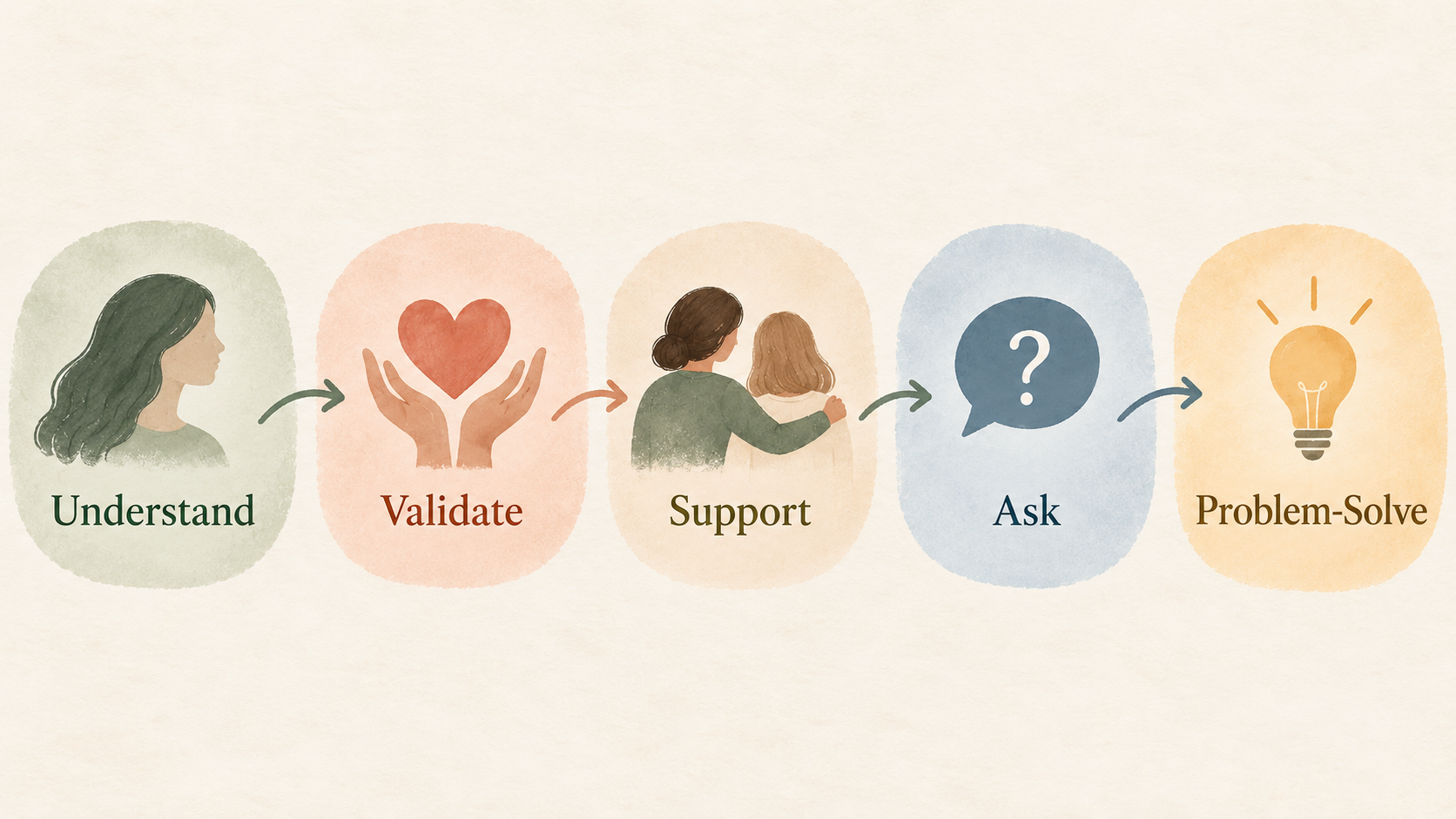
When someone we care about is upset, overwhelmed, or struggling with a difficult situation, our instinct is often to help. We offer advice, explain how we see the situation, suggest what they should do, or try to reassure them that things are not as bad as they seem.
The problem is that people often need something else before they are ready for solutions: they need to feel understood.
Validation does not mean agreeing with someone’s interpretation of events, endorsing every belief they have, or telling them they are right. It means communicating: “I understand what this experience is like for you, and I am here with you in it.”
A simple way to practice this is to follow four steps:
A — Summarize What They’ve Said
Summarize what they have told you about their situation or circumstances.
The goal is not to interpret, correct, or solve the problem yet. Simply show that you have been paying attention and understand what has happened from their perspective.
B — Make an Educated Guess About How It Might Make Them Feel
Based on what they have described, make an educated guess about how the situation might make them feel.
For example:
“That sounds like it would be really frustrating.”
“I imagine you might feel pretty alone in that situation.”
“It sounds like you felt dismissed.”
You do not have to guess perfectly.
C — Listen
Then listen.
See whether they respond with something like:
“Yes.”
“Exactly.”
“100%.”
Those responses usually tell you that you have accurately understood their experience.
If they say no, resist the urge to defend your interpretation. Let them describe it again in their own words, and then repeat Steps A–C.
The goal is not to be right about how they feel. The goal is to understand.
D1 — Remind Them That You Are on Their Side
Once they feel understood, something as simple as this can be powerful:
“Well, I’m here for you. I’m in your corner.”
Importantly, you do not have to agree with someone’s beliefs, conclusions, or intended decisions in order to tell them that you care about them and are there for them.
D2 — Invite Problem-Solving Rather Than Imposing It
Then you can offer:
“Let me know if you need any problem-solving or want to bounce ideas off me about what you’re thinking.”
This invitation matters.
Steps A through D1 are primarily about validation. You are listening, understanding, and communicating support.
Problem-solving begins only when the other person wants it.
If they accept your invitation to collaborate or problem-solve, then—and only then—you can begin offering your own views, perspectives, possible solutions, concerns, or strategies for change.
That separation can make difficult conversations much easier.
People are often considerably more receptive to another perspective after they feel that their own perspective has first been understood.